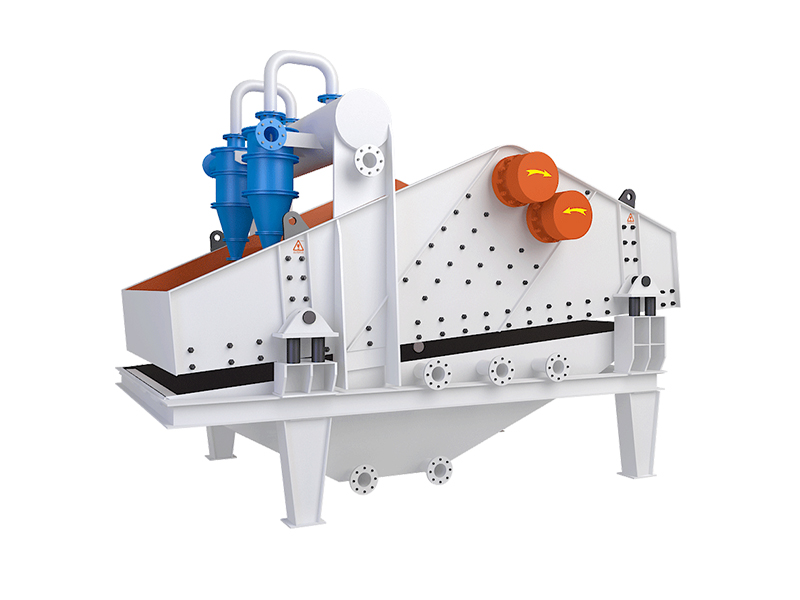
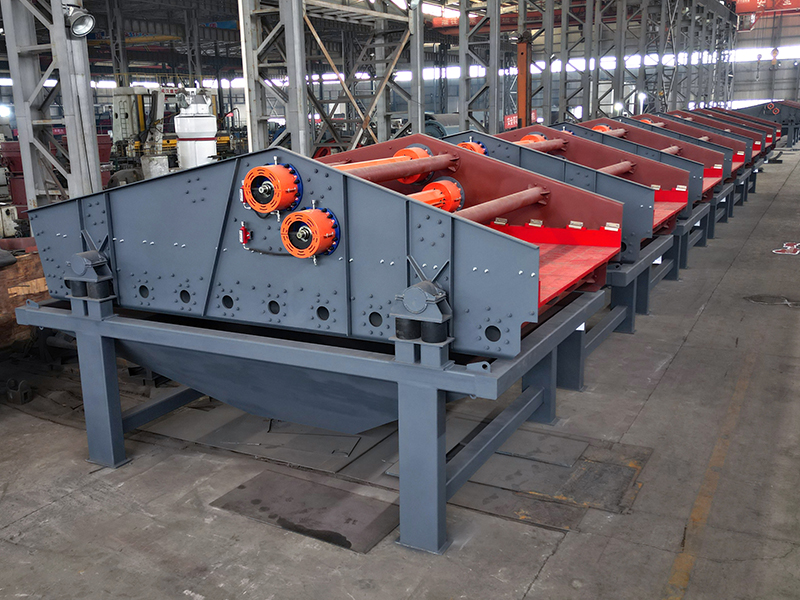
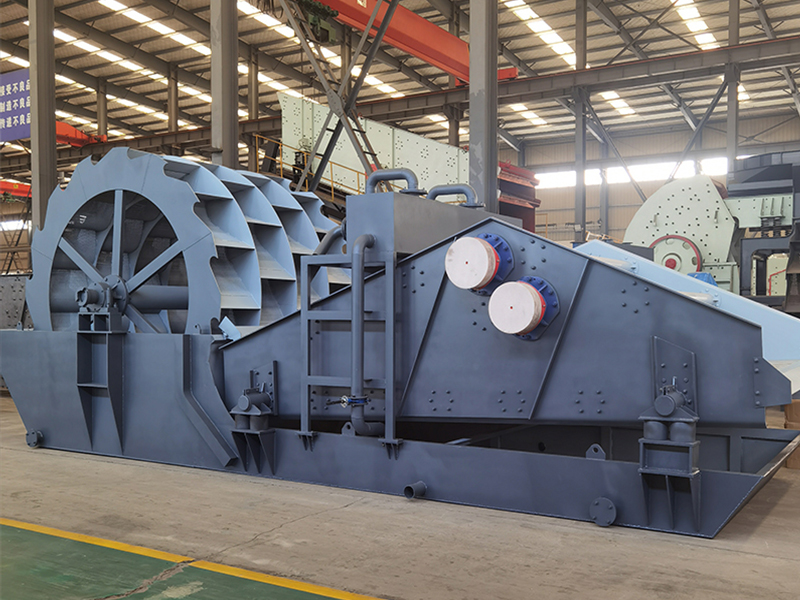
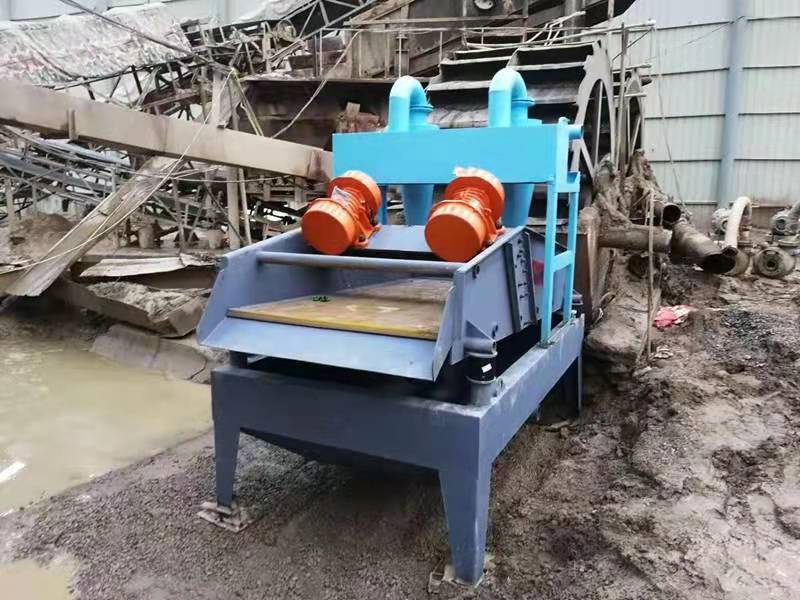
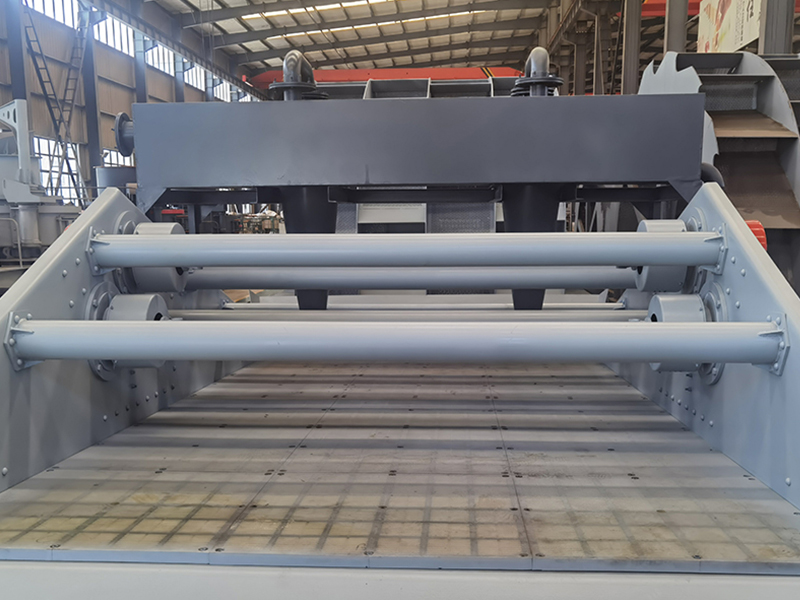
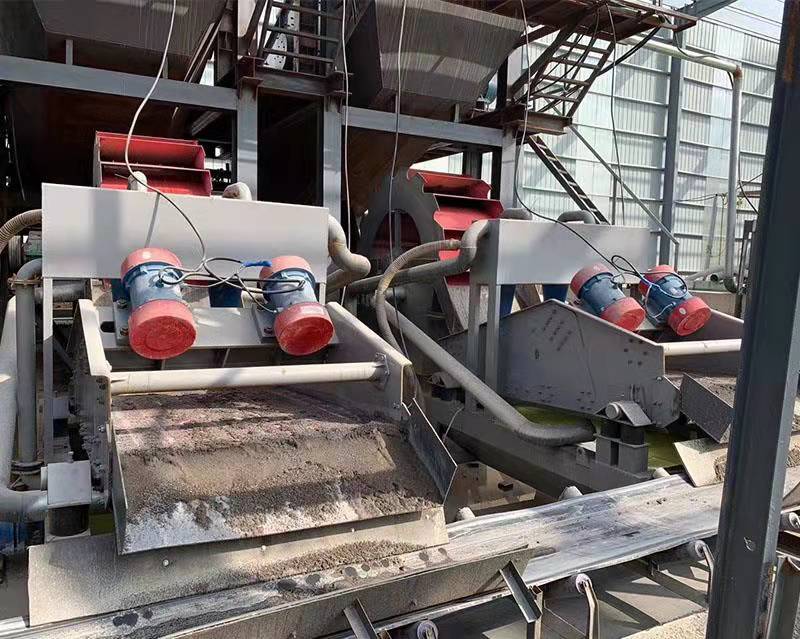
It mainly separates the solid particles suspended in the water through the aperture of the screen to achieve the purpose of dehydration. The vibration of the screen is used to screen out moisture and impurities in the material, thereby achieving the effects of dehydration, deludging and classification.
Our company has incorporated advanced international technologies and designed a state-of-the-art fine material extraction device based on the actual conditions of sand powder. This device's key feature is its ability to effectively address the problem of fine sand loss in the sand-making industry. The fine sand recovery device uses a slurry pump to inject slurry with a concentration of ≤40% into a hydrocyclone for separation. The separated coarse particles enter a dewatering screen for dewatering and recovery, maximizing the recovery of material larger than 75mm while removing sludge and clay smaller than 75mm. This minimizes fine sand loss and the resulting environmental pollution, thereby improving resource utilization.
Advantages and Features
Clean sand washing with high recovery rates: Secondary sand washing and dewatering of finished sand can achieve 80%-90% fine sand recovery.
Low cleaning costs: Fine particles are fully recovered, reducing the workload and cleaning costs of the sedimentation tank.
Cost and space savings: The vibrating screen combines cleaning, dewatering, and recovery functions, saving costs and space.
Longer life: The vibrating screen uses a polyurethane screen, which has a longer lifespan than other screen types and is non-clogging.
Working Principle
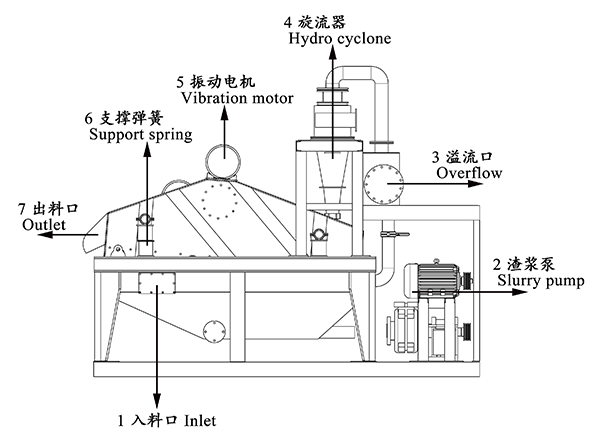
The BX fine sand recovery machine's main components consist of a motor, a high-pressure vacuum pump, a sediment separator, a ZKR dewatering screen, a cleaning tank, and a return tank. During operation, the pump pumps a slurry, sand, and water mixture into the sediment separator. Tailings, which have been centrifugally graded, are then fed to the dewatering screen via a sand settling nozzle.
After dewatering, the tailings are effectively separated from the water. A small amount of tailings and mud are returned to the cleaning tank via the return tank. If the liquid level in the cleaning tank is too high, the sand is discharged through the discharge port. The material recovered by the dewatering screen has a weight concentration of 70%-85%. The fineness modulus can be adjusted by varying the pump speed, slurry concentration, overflow water volume, or by replacing the slurry discharge nozzle.
This completes the three functions of cleaning, dewatering, and grading.
Technical Parameters
Model
Width×Length (mm)
Screening machine power(kw)
Cyclone specifications
Capacity(t/h)
Water consumption (m³/h)
Slurry pump power (kw)
Total power (kw)
Weight(kg)
Overall size length×width×height (mm)
SR1224‑35
1200×2400
2.2*2
350
50‑80
80‑120
18.5
23
2376
3000×1800×2773
SR1530‑65
1500×3000
3*2
300*2
80‑100
120‑180
15*2
36
3745
3500×2100×3200
SR1840‑75
1800×4000
5.5*2
350*2
100‑140
160‑240
18.5*2
48
5350
4500×2400×3300
SR2050‑100
2000×5000
11*2
250*4
120‑160
200‑280
18.5*2
59
6736
5500×2600×3520
SR2250‑100
2250×5000
11*2
250*4
150‑220
200‑280
22*2
66
7850
5500×2800×3600
Any change of technical data will not be advised separately.