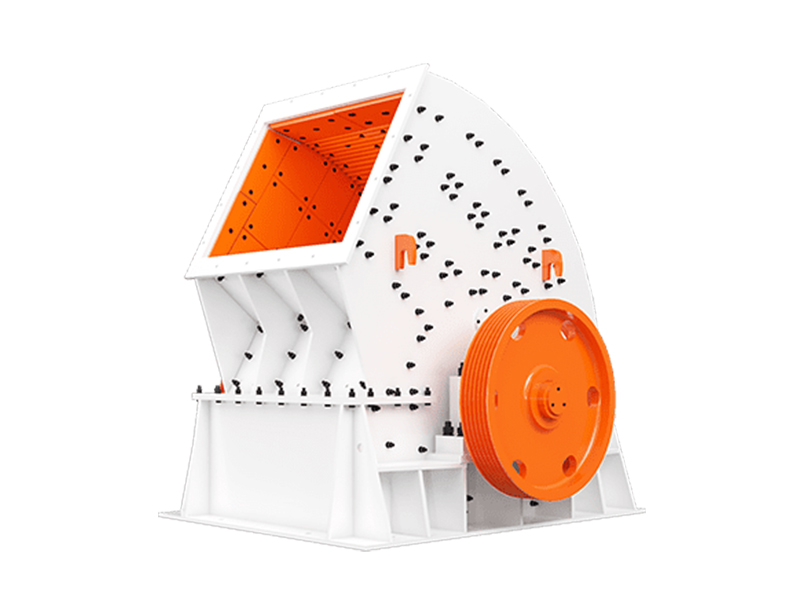
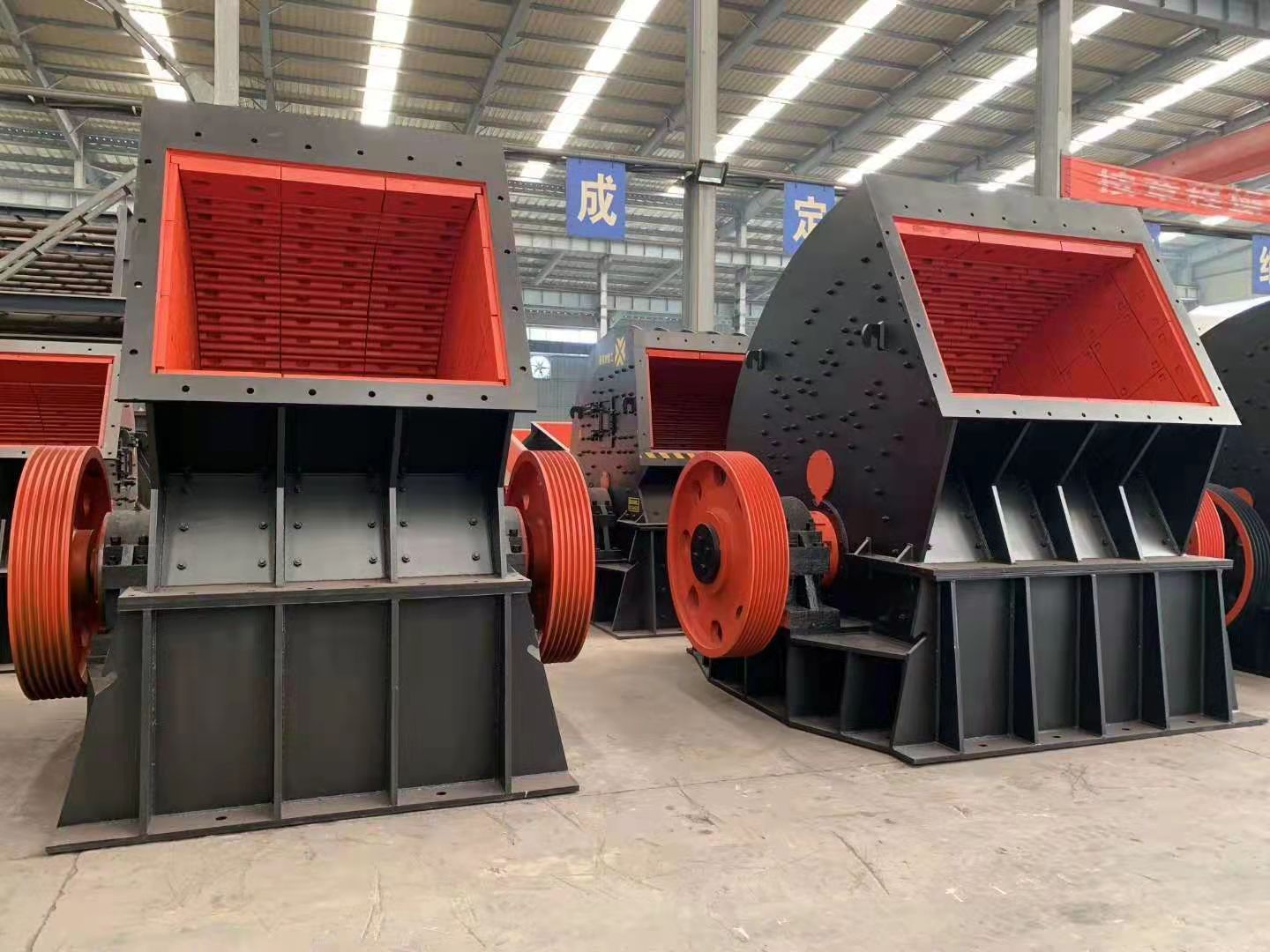
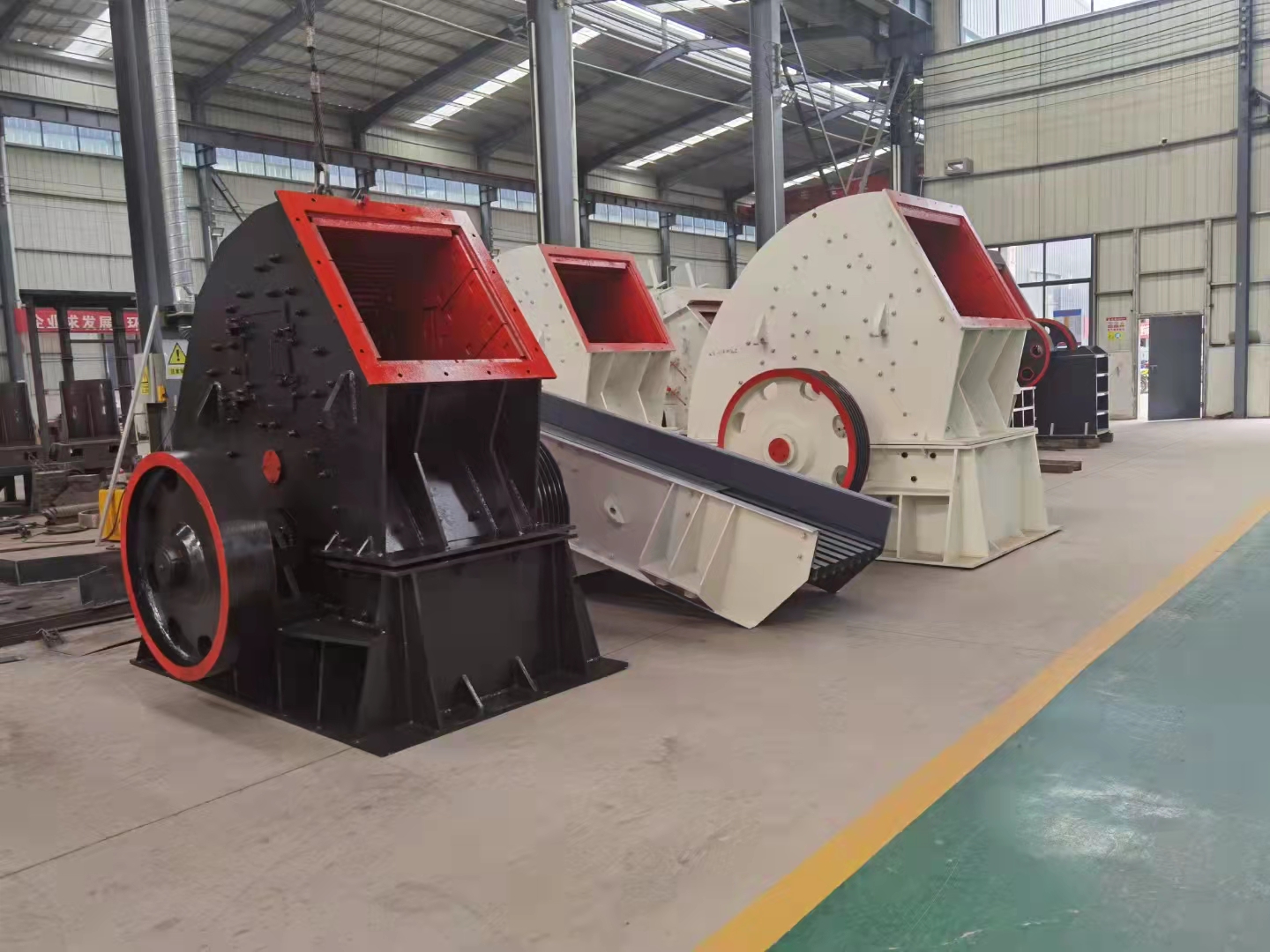
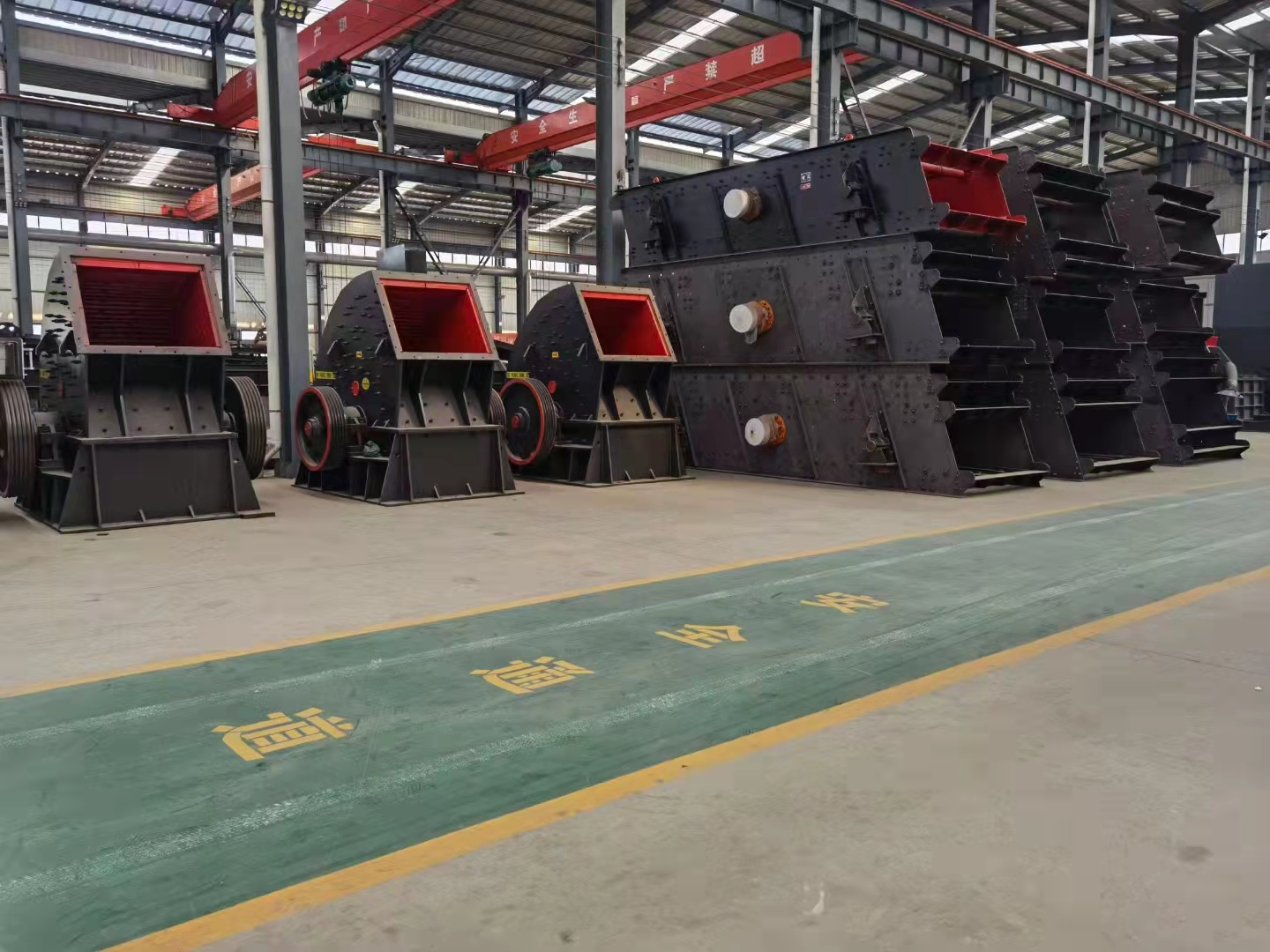
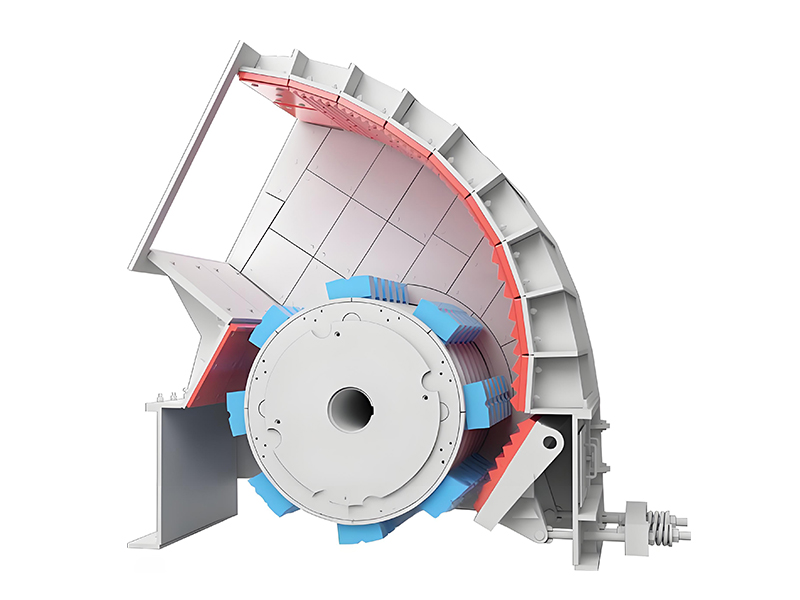
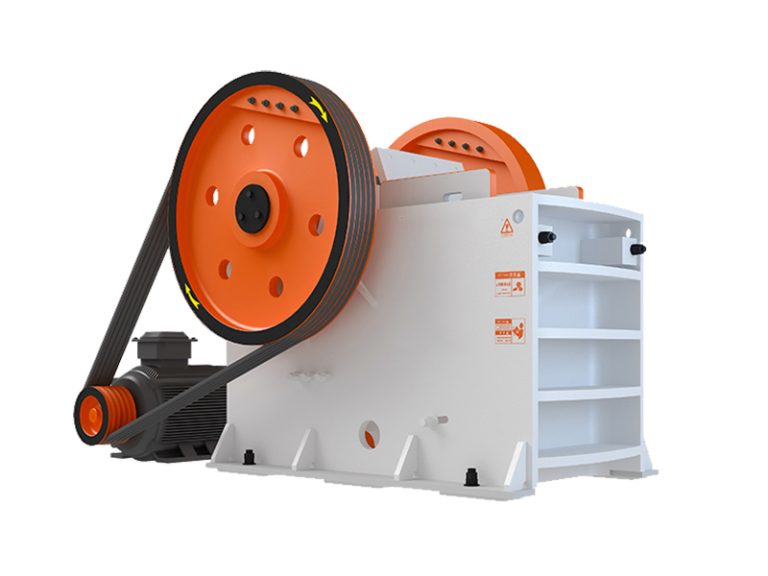
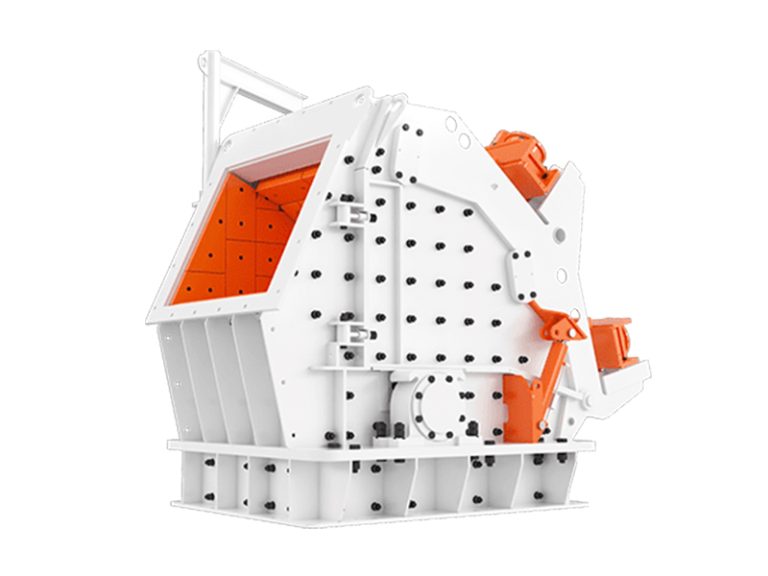
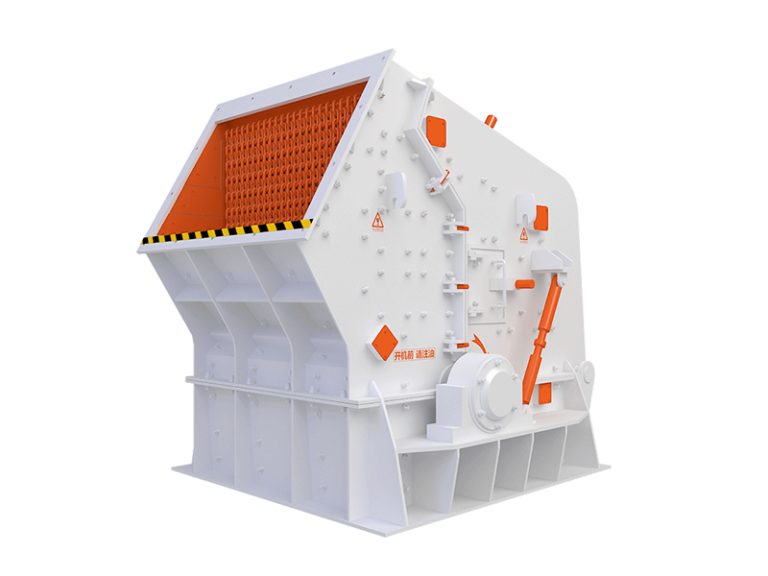
Heavy hammer crusher is a medium-to-large mining equipment that uses the impact force of high-speed rotating hammers to crush materials. It is suitable for medium and fine crushing of medium-hard materials with a compressive strength of ≤200MPa (such as limestone, bluestone, coal gangue, etc.)
The PCZ series heavy hammer crusher is a new type of heavy hammer impact crusher developed based on traditional hammer crushers, incorporating user feedback and industry developments. It is suitable 1 materials with a feeding size up to 2 meters, a compressive strength ≤200 MPa, and a calcium content ≥40%, such as limestone, ordinary sandstone, and construction waste. It is used in industries like mining, cement, building materials, and chemicals. It offers advantages such as large feed size, high crushing ratio, high yield, and a rounded particle shape. For production capacities below 600 tons per hour, it can produce general-grade aggregates directly (high-grade aggregates require secondary crushing).
Advantages and Features
Hydraulic Opening and Adjustable Discharge: The new model features hydraulic opening for ease of maintenance. The hydraulic system adjusts the gap between the impact plate and rotor, allowing for flexible control of the discharge size. The larger chamber design enhances throughput and increases the crushing ratio and yield.
Large Feed Size and High Yield:it can handle a maximum feed size of 2 meters and achieve a single-machine output of up to 3000 tons per hour. The absence of grate bars increases material throughput and allows for crushing of wet materials with moisture content up to 15%, solving problems of small feed size, clogging, and low yield in traditional hammer crushers.
One-step Crushing and Simple Process: For capacities up to 600 tons per hour, it produces general-grade aggregates directly (high-grade aggregates require secondary crushing). It replaces both jaw crushers and impact crushers, enabling a simple single-stage process and reducing investment by approximately 35% compared to a combined jaw and impact crusher setup.
Excellent Particle Shape and Low Flakiness:Materials are subjected to three stages of crushing, resulting in cubic-shaped particles that meet national standards for construction materials. The hydraulic adjustment and self-flow chute design minimize repeated crushing, reducing the amount of fines produced.
Highly Wear-resistant Rotor: The unique rotor disc with a full-wrapped wear-resistant ring overcomes the issue of severe wear and manual hardfacing in traditional designs. The wear-resistant ring is fixed with fasteners and is highly durable and easy to replace. The hammer disc is designed with eight hammer shaft holes, with four spare, significantly extending rotor disc lifespan.
High-chromium Alloy Hammers: The hammers are made from advanced high-chromium alloy with a double-liquid composite design, offering high impact resistance and wear resistance. This extends the replacement cycle, reduces downtime, and increases production capacıty.
Snail-shaped Reinforced Structure:The rear shell features a reinforced structure with high-strength bolts and disc springs for stability. The interior is lined with four different styles of wear-resistant plates fixed with high-strength bolts, and industrial felt underneath to cushion material impact, ensuring the shell remains intact and unaltered. The hammers can rotate 360 degrees, with large individual weights and disc diameters, allowing resistance to large material impacts. The optimized design eliminates grate bars, reducing hammer wear and extending lifespan by 3-5 times.
Working Principle
Stage 1: High-speed hammering (primary crushing)
Large pieces of material such as granite with a diameter of ≤1200mm) are thrown in from the feed port and instantly hit by the hammer on the rotor at a linear speed of 35-55m/s.
Impact force calculation: Assuming the hammer weighs 100kg and the rotation speed is 1200г/min, the kinetic energy of a single impact can reach 15,000 joules (equivalent to a 1.5-ton object falling from a height of 1 meter).
Stage 2: Impact crushing (secondary refinement)
The material that has not been crushed once hits the serrated impact plate, and through rebound, it forms a "hedge crushing" with the subsequent hammer, thereby improving the fine crushing rate.
Industry skills: The angle of the impact plate is usually designed to be 30°-45°. The smaller the angle, the longer the material stays and the finer the finished particle size.
Stage 3: Dynamic screening precise particle control)
The crushed material is screened by the grate bars, and qualified particles (≤ set size) fall down, while oversized particles continue to be "reprocessed" by the hammer head
Innovative design: Some high-end models use "wavy grate bars" to reduce the risk of blockage by increasing the screening area.
Technical Parameters
Model
Rotor Spec (Dia*L)(mm)
Feeder Opening Size (W*L)(mm)
Max Feed Size(mm)
Capacity (t/h)
Motor Power(kw)
Overall Dimension(mm)
PCZ1310
1310*1050
890*1075
≤650
150‑180
160
2.95023E+11
PCZ1512
1500*1160
1200*900
≤750
250‑320
160*2
3.26026E+11
PCZ1513
1500*1350
1290*900
≤750
300‑350
180*2
3.26026E+11
PCZ1615
1650*1452
1500*1200
≤1000
420‑500
220*2
3.66729E+11
PCZ1815
1850*1520
1500*1280
≤1100
520‑620
250*2
3.68029E+11
PCZ1620
1660*1900
2000*1200
≤1200
800‑1000
400*2
3.66732E+11
PCZ1820
1800*1964
2000*1200
≤1200
1000‑1200
450*2
3.70033E+11
PCZ2225
2200*2485
2530*1560
≤1600
2000‑3000
1250
4.46046E+11
PC0706
700*570
618*510
≤400
50‑70
75
1.95013E+11
PC0808
800*750
780*610
≤500
80‑100
132
2.28018E+11
PC0910
900*1000
1070*750
≤600
150‑200
110*2
2.60022E+11
PC1012
1000*1180
1255*810
≤650
250‑300
132*2
2.80023E+11
PC1213
1200*1280
1350*920
≤750
300‑350
160*2
2.97026E+11
PC1216
1200*1590
1530*920
≤750
400‑500
200*2
3.07028E+11
PC1220
1220*1950
2000*920
≤750
500‑600
220*2
3.08034E+11
PC1622
1620*2200
2200*1000
≤900
600‑800
250*2
3.69533E+11
Any change of technical data will not be advised separately.