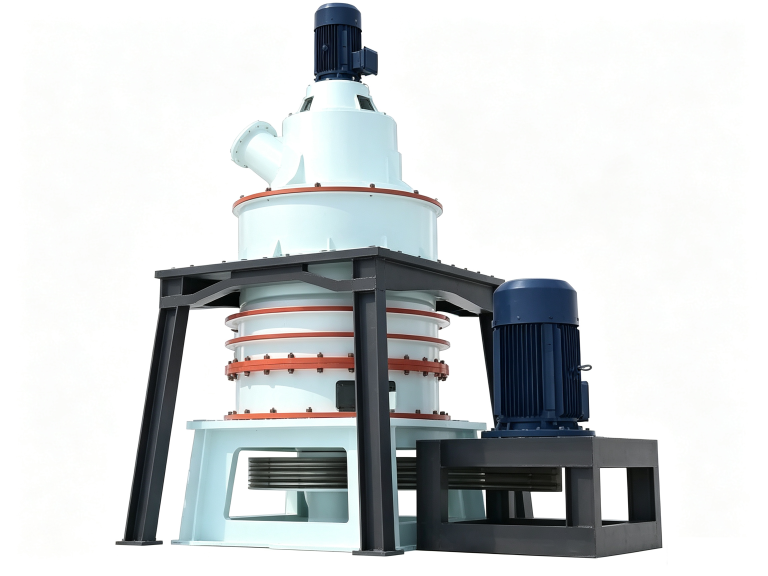
Applicable Materials:Vertical Roller Mill is widely used in cement, non-metallic mineral, power, metallurgy, chemical and new material industries forgrinding brittle mineral materials.
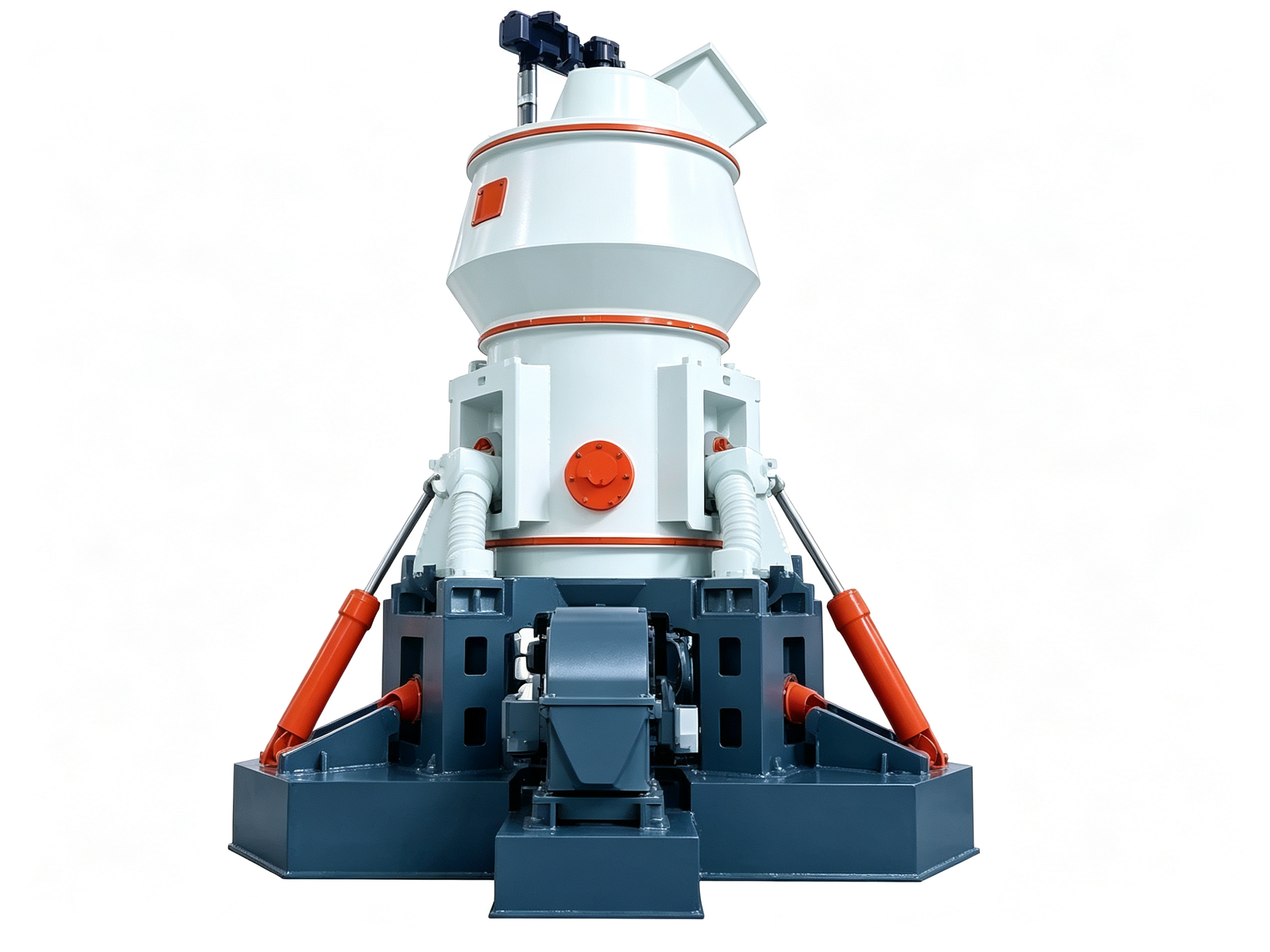
Vertical Roller Mill (VRM) is a grinding equipment widely used in the industrial field. It is mainly used for efficient crushing and grinding of solid materials such as ore, cement raw materials, coal powder, slag, etc. Its core feature is the use of a vertical structure, which achieves material crushing through the rolling action of the grinding roller and the rotating grinding disc, and has the advantages of energy saving, high efficiency, and environmental protection.
Core features:
Vertical layout and compact design
• Vertical arrangement: The grinding disc rotates horizontally, and the grinding rollers are distributed vertically and symmetrically. The vertical structure reduces the floor space and is suitable for plants with limited space.
• Integrated shell: The overall sealing design reduces dust leakage while integrating the airflow channel and material conveying path to improve the system's tightness.
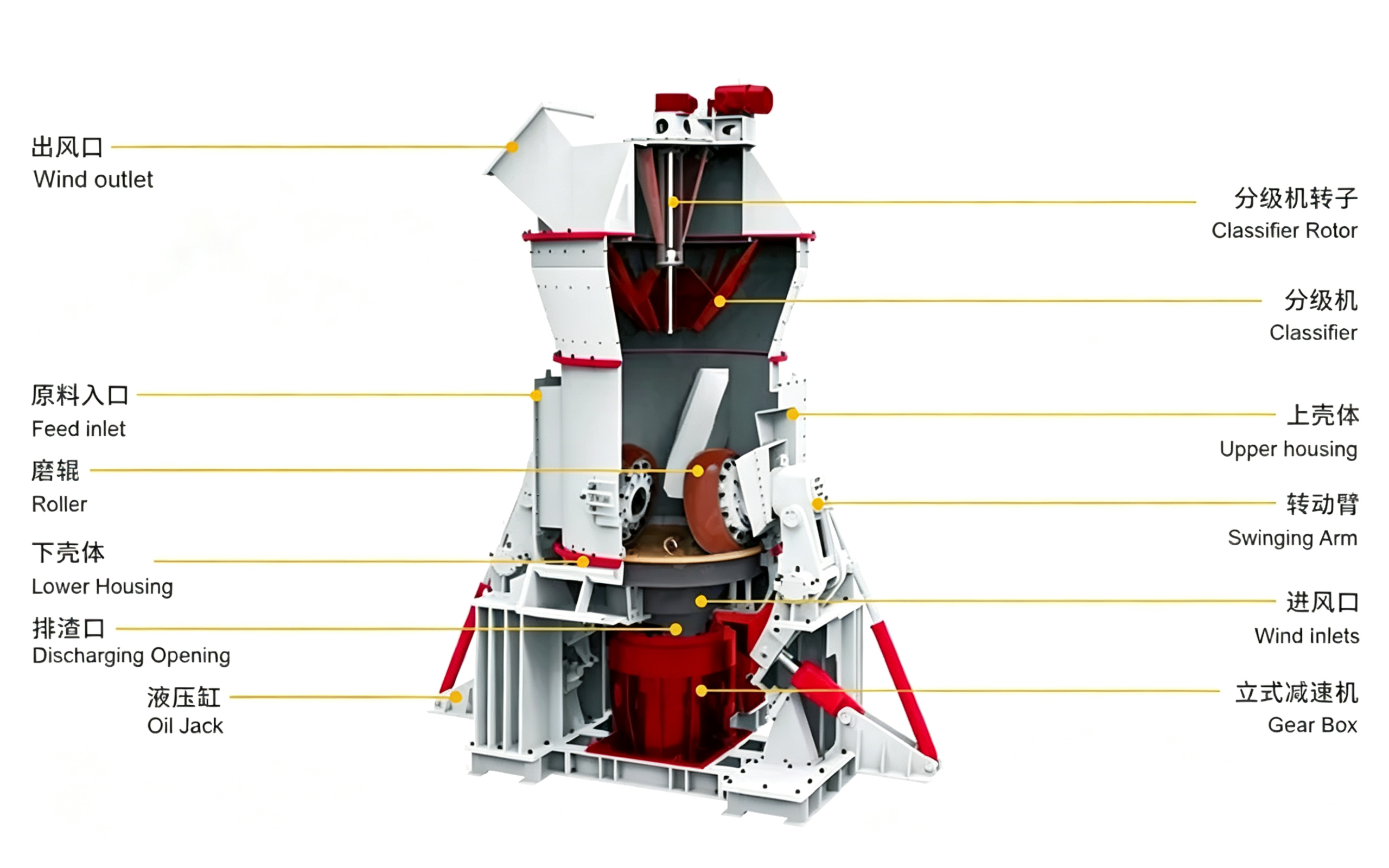
Core grinding components
• Grinding Table:
A horizontally rotating circular disk with a corrugated or grooved surface to enhance the shear force on the material.
The material is made of high-chromium cast iron or composite wear-resistant material to extend the service life.
• Grinding Rollers:
Multiple rollers (usually 2 to 6) are symmetrically distributed around the center of the grinding table, and pressure is applied by a hydraulic system or spring.
The roller surface is welded with a wear-resistant layer or inlaid with hard alloy to adapt to the grinding of high-hardness materials.
• Pressure regulation system:
The hydraulic device dynamically adjusts the grinding pressure of the grinding roller on the material to balance the grinding efficiency and equipment wear.
Advantages and Features
High grinding efficiency
• Saving 40% -50% power consumption compared to ball mill.
• The grinding roller grinding table does not direct contact during the grinding process, so the noise of the whole system is low.
Low investment cost
• It integrates crushing, drying, grinding, powder selection, and conveying into one, with a simple process flow and compact layout
• Small footprint, can be arranged in the open air, low construction cost.
Stable product quality
• The product has a narrow particle size distribution, uniform particle shape, and good fluidity.
• Grinding roller bearings are lubricated with forced thin oil, which longer bearing life.
The high degree of automation
• Adopt a fully automatic control system, that can realize remote control, easy to operate.
Working Principle
The vertical rolling mill has two pairs of grinding rollers. Each pair of the roller is composed of two narrow rollers mounted on the same axis and can rotate at different speeds. The motor driving reducer makes the grinding plate rotate. The raw material is sent to the center of the rotating grinding plate by the locking air feeding equipment. Under the action of centrifugal force, the material moves to the surrounding area of the grinding plate and enters the grinding roller slide. Under the action of roller pressure, the material is crushed by extrusion, grinding, and shearing. At the same time, the ground material is flowed by hot air upward from the wind ring. The coarse granularity will be back to the mill to regrind and suspended material will be dried. Fine powder following hot air is taken to the classifier system. Qualified powder enters the powder collector with airflow as finished products. Unqualified powder falls to be regrinded with new feeding material together. This cycle is continuous to complete the whole grinding process.
Technical Parameters
Model
SRM1300
SRM1500
SRM1700
SRM1900
SRM2200
Grinding Table dia.(mm)
1300
1500
1700
1900
2200
Max. Feeding Size(mm)
38
38
38
38
38
Discharge Size (um)
212-45
212-45
212-45
212-45
212-45
Discharge Size(mesh)
70-325
70-325
70-325
70-325
70-325
Air-in Tempreture(℃)
≤350
≤350
≤350
≤350
≤350
Air-out Tempreture(℃)
70-95
70-95
70-95
70-95
70-95
Max Input Material Moisture(%)
4
4
4
4
4
Final Moisture(%)
≤1
≤1
≤1
≤1
≤1
Capacity(t/h)
10-28
13-38
18-68
23-85
36-135
Power(kw)
132-200
220-285
315-400
450-600
600-750
Any change of technical data will not be advised separately.